Native Plants for Cedar Park Yards: Tough, Beautiful, and Low-Maintenance
Native and Texas-adapted plants do the most work with the least intervention in Cedar Park yards. Here are the species that earn their place in nearly every design.
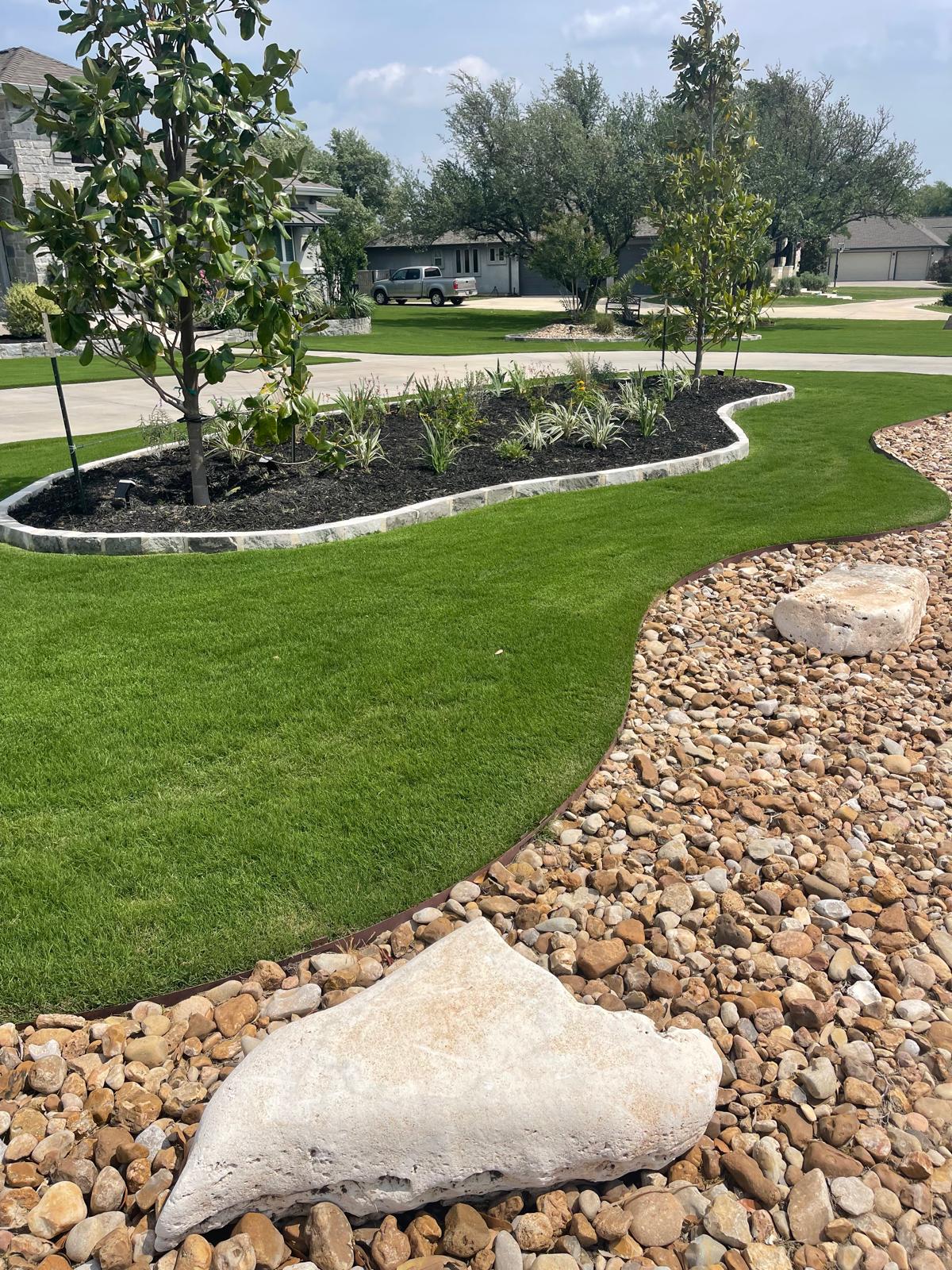
Native plant lists for Central Texas can stretch into the hundreds, but a small group of species shows up again and again in successful Cedar Park landscapes because they thrive in alkaline soil, tolerate triple-digit summers, and recover from the occasional hard freeze without help. Building a design around these workhorses keeps water bills low, reduces seasonal replacement, and gives the yard a look that fits the Hill Country rather than fighting against it.
Reliable shrubs
Texas sage (cenizo) handles full sun, alkaline soil, and drought without complaint and rewards rain with a flush of purple flowers. Dwarf yaupon and dwarf wax myrtle give structure and evergreen mass year-round. Esperanza grows back from a hard freeze and pushes yellow blooms from June through October. These four species fill ninety percent of the shrub roles in well-built Cedar Park landscapes.
Perennial color
Salvia greggii (autumn sage), lantana, blackfoot daisy, gregg's mistflower, and damianita all bloom across multiple seasons, attract pollinators, and ask for almost nothing once established. Pruning them back hard in late winter resets the form and produces the heaviest bloom. These are the plants that carry color through the months when the rest of the yard is just holding on.
Ornamental grasses
Mexican feathergrass moves in the slightest breeze and softens any planting. Gulf muhly throws clouds of pink in October. Big muhly anchors larger beds with structure that holds through winter. These grasses give a Cedar Park yard the loose Hill Country feel that suits the architecture of most homes in the area.
Ground covers and accents
Frogfruit, silver ponyfoot, and creeping germander all work as living mulch where Bermuda is not appropriate or wanted. Red yucca anchors corners. Mexican feather grass and bicolor iris fill the in-between spaces with movement. A Lopez landscape design pulls from this palette and adapts the combinations to the specific light, soil, and footprint of each property.
Layering for year-round interest
The strongest native plantings in Cedar Park work on three layers — a tall structural layer of small trees and large shrubs, a middle layer of perennials and grasses, and a low layer of ground covers and accent rocks. Each layer carries the design through a different part of the year. Texas sage and esperanza dominate the summer. Muhly grasses and asters take over in fall. Yaupon hollies hold the structure through winter with red berries that feed birds. Salvia and damianita lead the spring. Laying out the planting plan to give every season a strong moment is what keeps the yard interesting in November as well as in May.
Pollinators and wildlife matter more than people expect
A native-heavy landscape in Cedar Park is also a habitat for hummingbirds, butterflies, bees, and the songbirds that eat the seed heads through fall. Autumn sage, esperanza, and mistflower pull in pollinators all season. Inland sea oats and little bluestem produce seeds that finches strip clean every November. The native landscape has a quiet, ongoing performance built into it — small movements, color, and sound that most non-native plantings simply do not provide. For families who spend time on the back patio, that extra layer of interest is the single biggest reason native plantings tend to grow on homeowners year after year, even when they started the project for practical reasons.
Lopez Landscaping & Tree Service handles this kind of work across Cedar Park, Leander, Liberty Hill, and the surrounding communities. We are bilingual, licensed, and dependable from the estimate through the final cleanup.
Looking for a dependable Cedar Park crew?
Lopez Landscaping & Tree Service handles landscaping, lawn care, tree work, and outdoor projects across Cedar Park and the surrounding area. Free estimates, bilingual service.