
Mulch Bed Maintenance in Cedar Park Before Summer: What to Do Now
Late May is the right moment to service mulch beds in Cedar Park before summer heat arrives. Getting the depth, edges, and bed prep right now reduces water loss and protects plant roots through the hottest months.
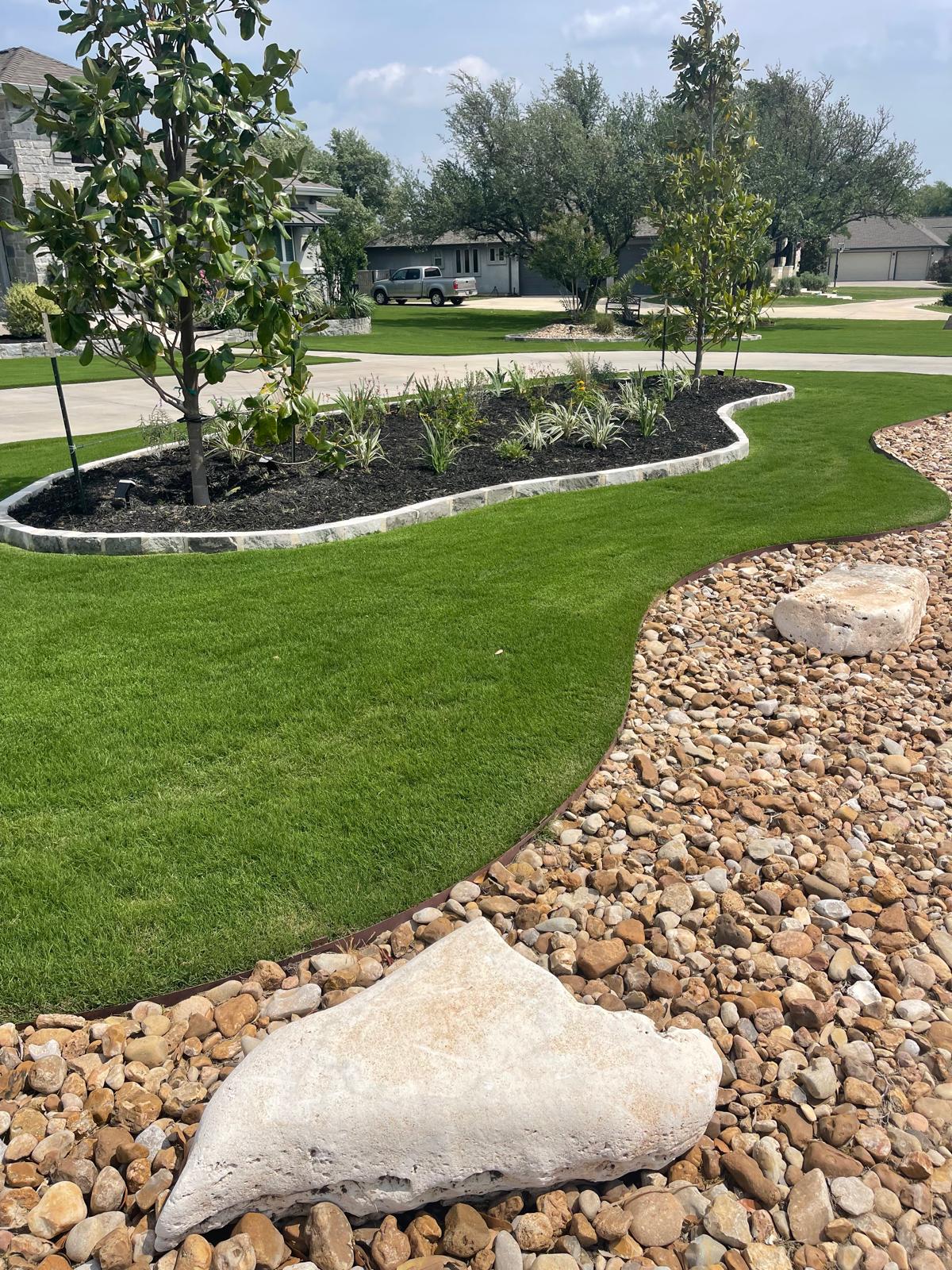
Mulch beds in Cedar Park look the same whether they are doing their job well or poorly, at least until summer arrives and makes the difference visible. A bed with the right depth and fresh material holds soil moisture through the triple-digit weeks in June and July, keeps the root zone cooler than bare soil by ten degrees or more, and suppresses the weeds that come on strong once summer rains kick in. A bed that is too thin, too old, or caked down from winter compaction loses those benefits quickly once the heat arrives. Late May is the last comfortable window to address it before working in a Texas yard becomes difficult and the plants are already under stress.
Check depth before adding more material
Two to three inches of mulch is the target in Central Texas planting beds. Less than two inches and the moisture retention benefit largely disappears — water evaporates from the soil surface before it can be used by plant roots, and weed seeds germinate more freely. More than four inches can cause problems of its own: it stays wet long enough in humid spells to encourage fungal growth at the base of plant stems, and it can prevent light rains from reaching the soil at all. Before ordering a fresh load of material, pull back the existing mulch in a few spots around the bed and measure what is actually there. Beds that were freshly mulched in April may only need spot topping in thin areas. Beds that were last done in the fall probably need a full refresh.
Break up the crust before adding new material
Decomposed organic mulch compacts over a season into a layer that sheds water rather than letting it through to the soil. When you pour water onto a mulched bed and see it bead up and run toward the edges instead of soaking in, that is compaction doing its work. A quick raking or turning of the existing material before fresh mulch goes on top breaks up the crust, improves water infiltration, and mixes the decomposed layer back into the bed where it adds organic matter to the soil. Skipping this step and just adding more mulch on top of a compacted layer wastes material and does not solve the drainage problem.
Pull weeds before mulching, not after
Late May in Cedar Park is when spring weeds are finishing their cycle and summer annual weeds are just beginning to establish. Mulching over established weeds, especially ones with seed heads already forming, does not suppress them — it gives them a warm, moist environment to continue growing under the mulch layer. The cleanup step comes first: pull or treat the existing weeds, let the bed dry for a day, then apply fresh material. A pre-emergent product applied to bare soil just before mulching can help suppress the summer germination flush that typically follows any bed disturbance, but it needs to go down before the mulch, not on top of it.
Keep mulch away from plant stems and tree trunks
The most common mulching mistake in Cedar Park yards is piling material against the base of shrubs, perennials, and tree trunks. Mulch against a trunk traps moisture at the bark and creates conditions for rot and insect damage that are hard to reverse once established. The correct practice is to pull the material back a few inches from each plant stem and leave a ring of bare soil around tree trunks at grade level. The mulch covers the soil, not the plant. The ring does not need to be large — an inch or two of clearance is enough — but it makes a real difference over multiple seasons.
Edge the beds before summer weed pressure builds
A clean, defined edge between a mulch bed and the lawn is not just cosmetic. A sharp edge cuts the grass rhizomes that would otherwise creep into the bed and compete with the plantings. In Cedar Park lawns with Bermuda grass, that creep is aggressive — Bermuda will colonize a poorly edged bed in a single season. A spade or edging tool used now, while the soil still has some spring moisture in it, creates a clean line that holds well through summer. A bed with good edges needs far less maintenance through the summer than one where the lawn has been gradually encroaching for months.
Lopez Landscaping & Tree Service handles mulch delivery, bed preparation, edging, and seasonal landscape maintenance for residential properties across Cedar Park and the surrounding communities. Bilingual service, free estimates, and dependable work from start to finish.
Ready to get the beds ready for summer?
We handle mulch installation, bed prep, edging, and seasonal landscape maintenance across Cedar Park. Free estimates, bilingual service.