
Mid-Summer Irrigation Efficiency in Cedar Park: Cutting Water Without Killing Your Yard
Watering restrictions and triple-digit heat both arrive in Cedar Park around the same week. A tuned irrigation system is the difference between a yard that holds through August and a water bill that keeps climbing.
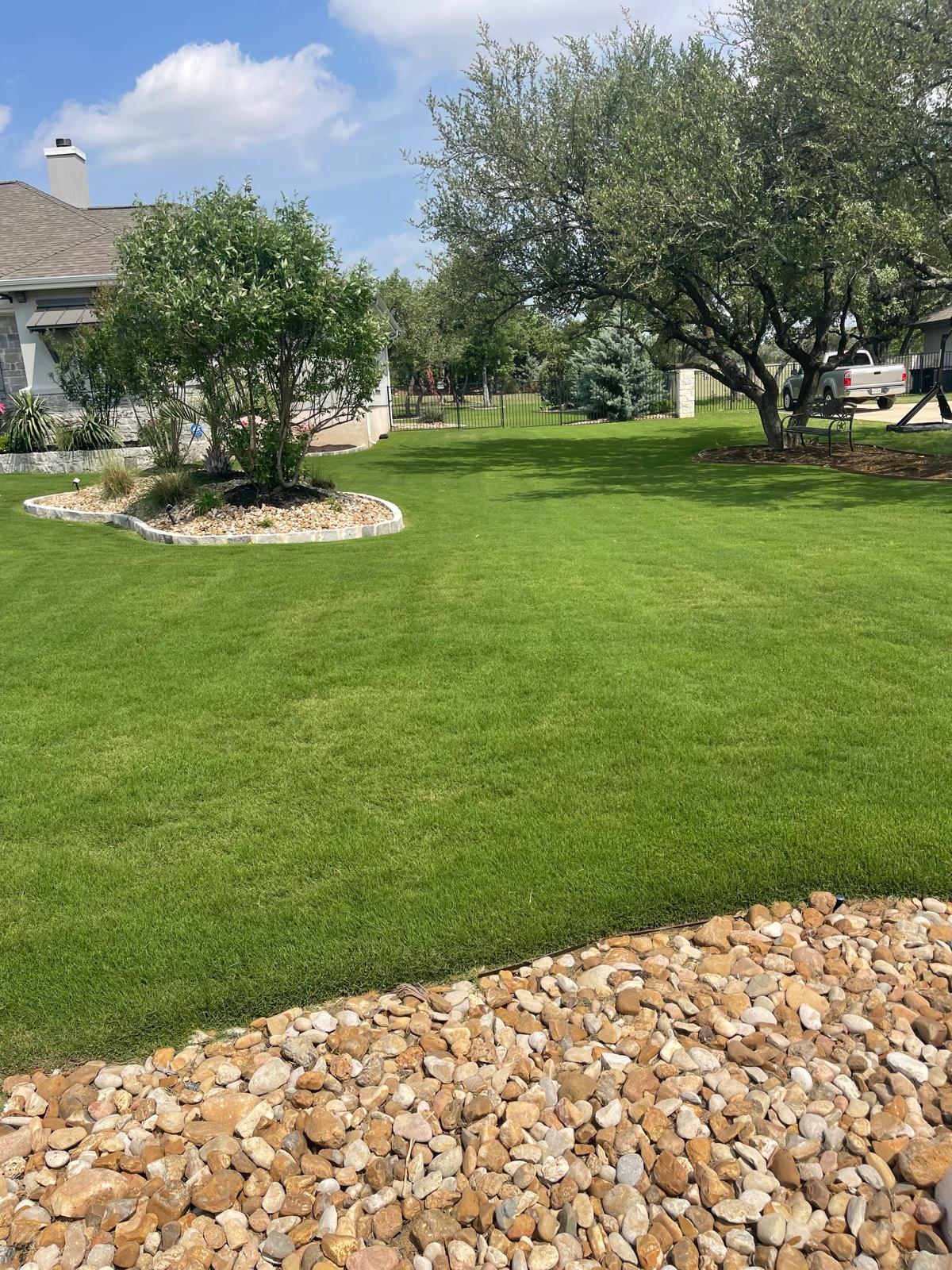
By mid-summer, most Cedar Park irrigation systems have been running on a spring schedule for two months — and that schedule is rarely the right one for July and August. Heat, watering days, and clay soil all push the system to its limit, and the yards that come through summer without burned spots or runaway bills are almost always the ones where someone has gone back and tuned the system, zone by zone. The good news is the tune-up does not take long, and it pays for itself in the first month.
Walk every zone with the system running
The single most useful thing a homeowner can do is watch each zone run for one full cycle. Crooked spray heads, heads sunk into the lawn, heads tilted toward a fence or sidewalk, and heads partially blocked by a shrub are all wasting water every cycle. Straightening, raising, and clearing the heads usually recovers more coverage than people expect. While the zone runs, look for low-pressure heads, fogging heads (too much pressure or the wrong nozzle), and any zone where water is running off into the street within a few minutes — that one needs cycle-and-soak.
Match run times to the soil, not the calendar
Central Texas clay soil takes water slowly. Running a single long cycle on lawn zones means most of the water sheets off before it soaks in. Splitting that run into two or three shorter cycles spaced an hour apart lets the soil absorb between bursts, which puts water at the roots instead of the curb. Bed zones with drip lines work the other way — they want longer, less-frequent run times so the moisture goes deep instead of just wetting the mulch surface.
Stay legal and stay early
Cedar Park and most surrounding cities have set watering days during summer. Running outside those windows is a fine waiting to happen and does not help the lawn anyway. The best run time is before sunrise, finishing by 8 a.m., so the foliage dries before disease can get started and the soil holds water before the heat takes it. Skip the controller's "smart" rain delays if they have not been calibrated — many of them under-water in true heat. A simple weekly check is more reliable.
Drip lines and bed zones earn their keep
Beds with shrubs, perennials, and trees do better on drip than on spray. Drip drops the water exactly where it is needed, loses almost nothing to evaporation, and stays within the watering rules even on no-spray days in many cities. If a yard still has rotors or spray heads watering planted beds, converting those zones to drip is one of the highest-return upgrades available — usually paid back inside a single summer season.
Watch the trees, not just the grass
Established trees in Cedar Park need a deep soak every two to three weeks during summer, not the daily light watering the lawn gets. A soaker hose run at the drip line for an hour, or a dedicated bubbler zone, keeps the root system healthy through heat and cuts the risk of expensive limb loss or full tree decline later. Lawns recover from a rough summer. Mature trees often do not.
Lopez Landscaping & Tree Service handles irrigation tune-ups, head replacements, drip conversions, and seasonal maintenance across Cedar Park and the surrounding area. Reliable work, fair pricing, and a team that shows up — bilingual service available so every customer gets a straight answer about what their system actually needs.
Need an irrigation tune-up before the worst of summer?
We handle head adjustments, drip conversions, controller programming, and full system audits across Cedar Park. Smart watering, healthier yards, lower bills.