
French Drain vs. Dry Creek Bed for a Cedar Park Yard
Both systems can move stormwater, but they solve different drainage patterns and create very different results in the landscape.
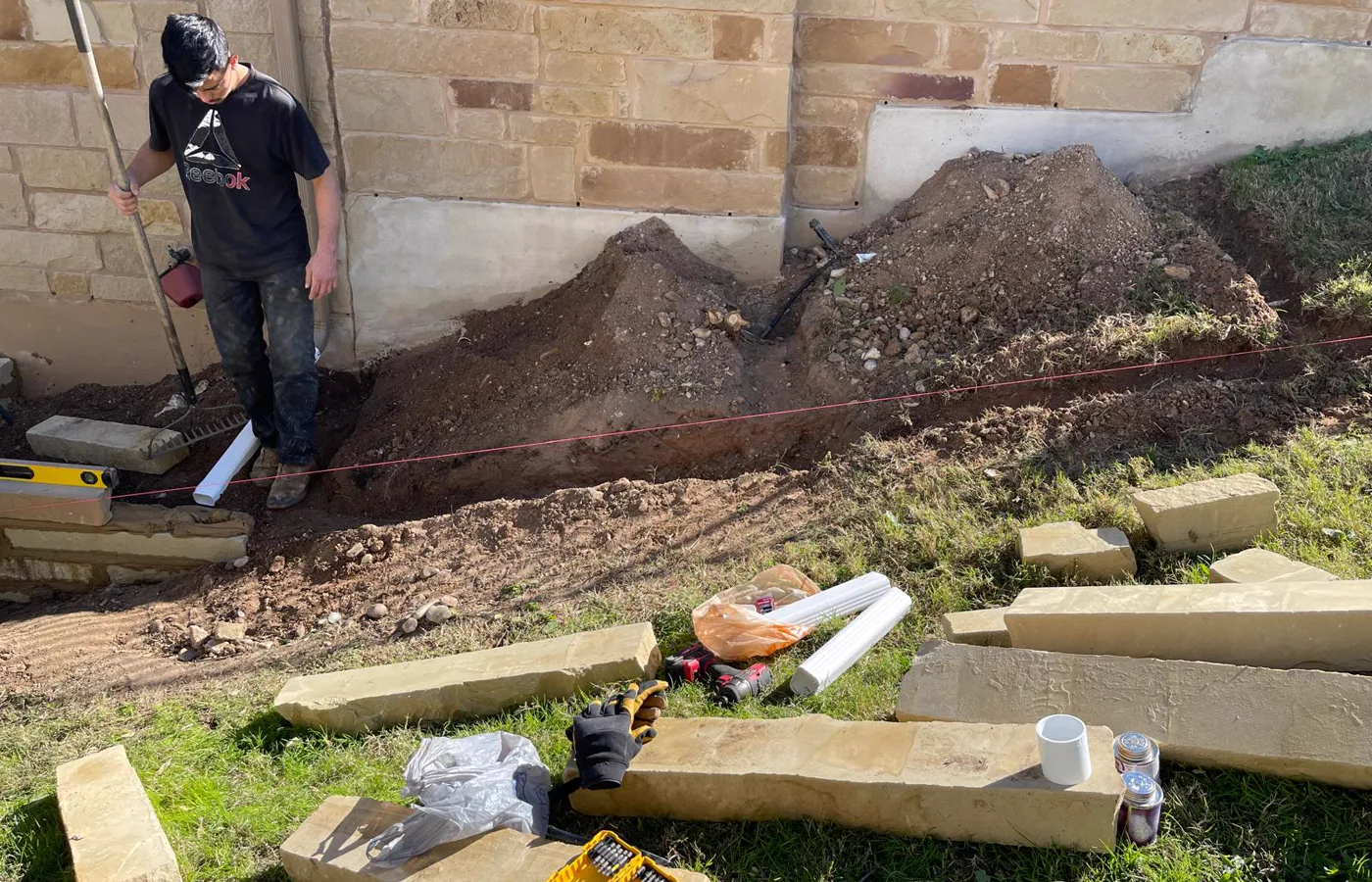
Heavy rain can reveal every low spot in a Cedar Park yard. Water may sit beside the foundation, cross a walkway, or collect where compacted clay drains slowly. Two common solutions are French drains and dry creek beds, but they are not interchangeable decorations. The right choice begins with understanding where the water comes from, how it moves across the property, and where it can be discharged safely.
A French drain collects subsurface or persistent standing water through a perforated pipe surrounded by clean drainage stone. The trench is graded so water moves toward an approved outlet rather than remaining in the saturated area. Because most of the system sits below the surface, it can preserve usable lawn or planting space. It is often considered when a low strip stays soggy, water seeps through soil, or runoff must travel discreetly along a narrow route.
A dry creek bed handles visible surface flow while becoming part of the landscape. A shaped channel lined with stone slows and directs runoff through a route that looks intentional even when it is dry. It can work well where stormwater naturally crosses an open yard or where erosion has already cut a path. The channel still needs correct slope, width, depth, and a stable destination; simply placing rocks in a low area will not fix the underlying drainage pattern.
Maintenance differs too. French drains need protected inlets and outlets so sediment and roots do not restrict the pipe. Dry creek beds may collect leaves, soil, and mulch after storms, especially near bends or plantings. Both systems should remain accessible for inspection. Landscape fabric and stone selection can help control migration, but the design should account for the volume and speed of water rather than relying on materials alone.
Some properties benefit from a combination. A surface channel can guide roof or uphill runoff toward a collection point, while a buried line carries it through a tight side yard. Before installing either one, downspouts, irrigation leaks, soil grading, and neighboring runoff should be checked. Drainage work must also avoid sending water toward another structure or property, and underground utilities should be located before excavation begins.
Observe the yard during an actual storm before choosing the route. Photos or short videos can show where runoff enters, how quickly it moves, and which low areas fill first. A dry-day depression is not always the source of the problem, and a system placed at the wrong elevation cannot collect water effectively. Mapping the flow also helps protect patios, planting beds, fences, and walkways from a solution that simply shifts erosion elsewhere.
The best system is the one matched to the actual water problem. Lopez Landscaping & Tree evaluates Cedar Park yards, grading, hardscape, and planting areas before recommending a route. A properly planned French drain or dry creek bed protects usable space, reduces erosion, and helps the landscape recover after Central Texas storms instead of staying muddy for days.
Water collecting in your yard?
We help Cedar Park homeowners plan practical drainage, grading, and landscape improvements. Free estimates and bilingual service.