
Drought-Tolerant Landscape Design for Central Texas Summers
A yard in Cedar Park has to survive long stretches of triple-digit heat, watering restrictions, and clay soil that bakes hard. The right design choices make that easier on the plants and on you.
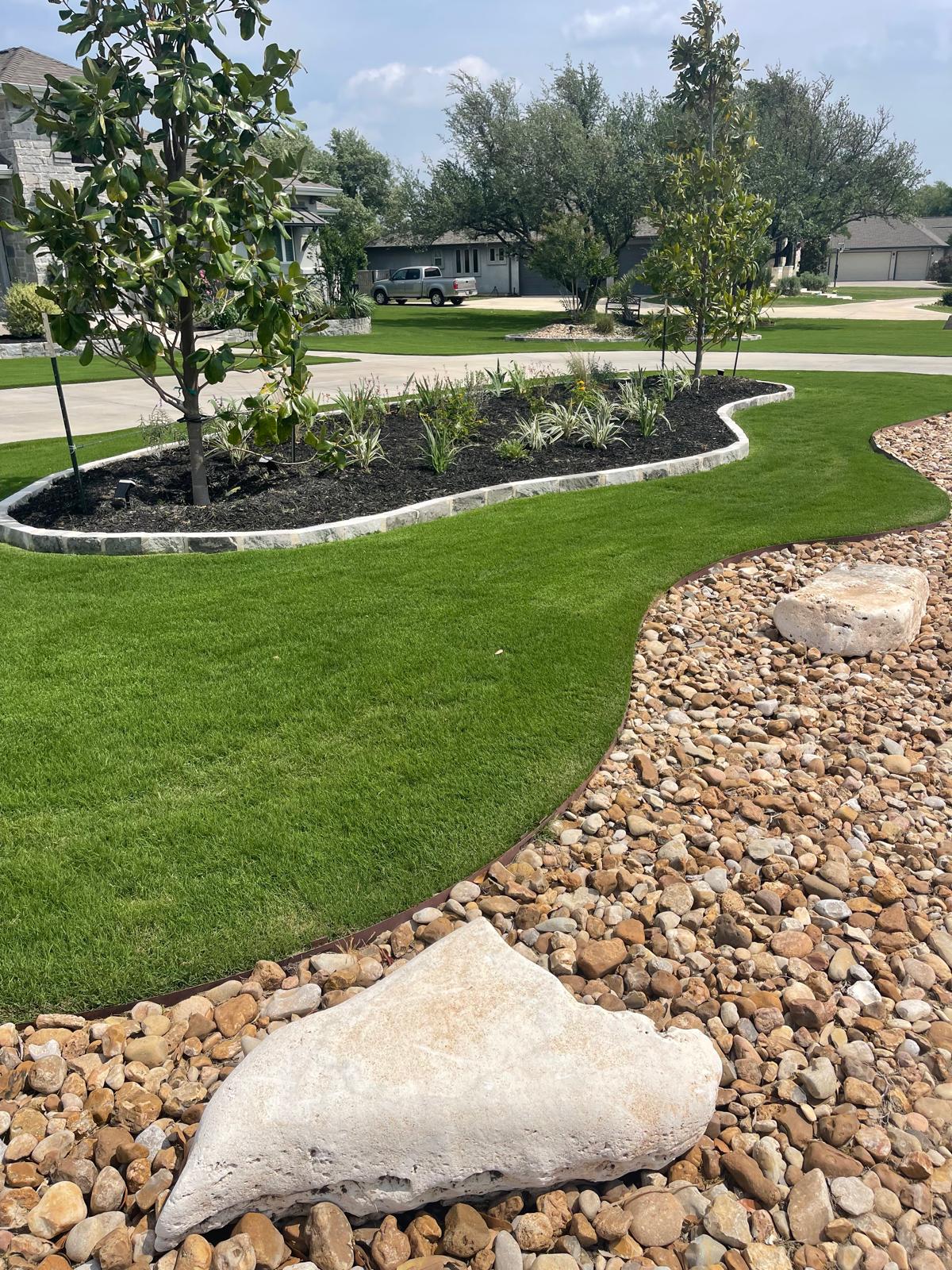
Most landscape problems in Central Texas show up in July and August. Plants that looked healthy in April start crisping at the edges, ground cover thins out, and beds need water every other day just to hold on. A lot of that comes back to the original design. When the plant choices and layout are built for the climate from the start, summers get a lot easier and water bills stay reasonable.
Start with plants that already like the heat
Native and adapted plants are the foundation. Things like Texas sage, salvia greggii, blackfoot daisy, lantana, and Mexican feathergrass thrive in our soil and shrug off heat that punishes imported varieties. Yaupon holly and Texas mountain laurel handle structural roles in the yard without constant babying. The advantage is not just survival — these plants tend to flower, hold color, and stay full through summer instead of going limp.
Replace thirsty turf with smarter ground cover
Large unbroken lawns are the single biggest water draw on most properties. Trimming back the turf footprint and replacing parts of it with drought-tolerant ground covers like frogfruit, silver ponyfoot, or horseherb cuts water use without losing the green look. Decomposed granite paths, river rock beds, and stone borders also break up open areas and reduce how much surface needs irrigation in the first place.
Group plants by water need
One of the most common design mistakes is mixing high-water and low-water plants in the same bed. The whole bed ends up watered to the thirstiest plant, which stresses the drought-tolerant ones and wastes water. Zoning the yard so that thirsty plants sit near the patio or shaded edges, and tough plants take the open sun, makes irrigation cleaner and lets each plant settle into the conditions it actually wants.
Use mulch and shade as part of the design
Two to three inches of mulch over every bed keeps soil temperature down and slows evaporation. Trees and tall shrubs placed thoughtfully — on the south and west sides especially — drop summer ground temperatures noticeably and protect more delicate plants underneath. Good design uses shade as a tool, not just a feature.
Lopez Landscaping & Tree Service designs landscapes around Cedar Park and Central Texas with summer reality in mind, so the yard you install in spring still looks good in August.
Planning a yard that can handle Texas summers?
We design and install landscapes built for Central Texas heat, soil, and water rules. Native plants, smart layout, clean finish.