
Drainage and Grading Around the Foundation in Cedar Park Yards
Most foundation issues in Cedar Park start at the surface, not in the slab. Getting the grading and drainage right protects the structure for decades.
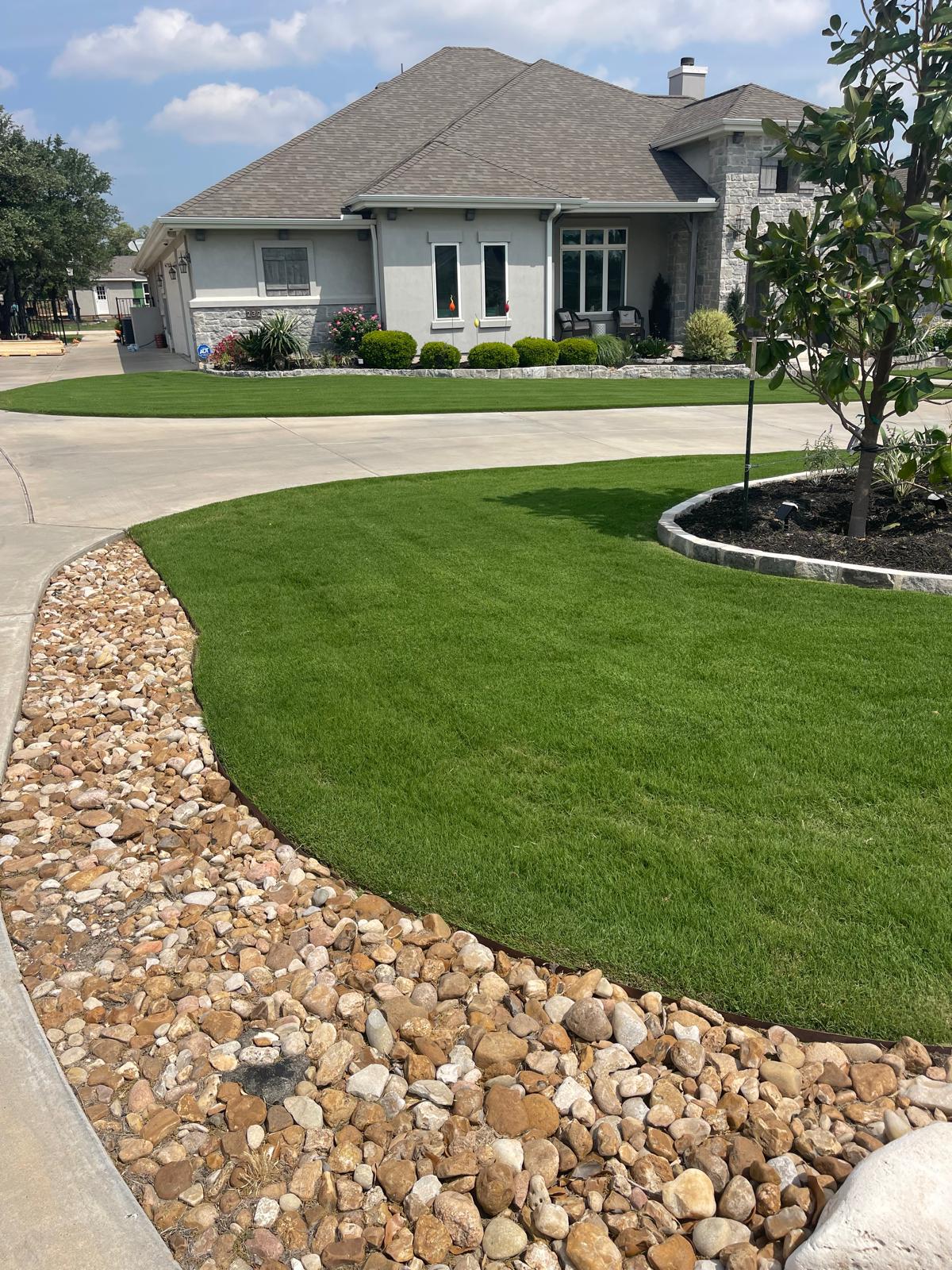
Cedar Park homes sit on a mix of clay and limestone that moves seasonally with moisture. The yards around them have to manage water carefully — toward the storm system, away from the foundation, and across the property without ponding. When the grading is right, the slab stays stable through wet winters and dry summers. When it is wrong, water either pools against the foundation and pushes clay into expansion, or runs off too fast and erodes the lawn. Fixing the grade is one of the least visible but most important landscape projects on most Cedar Park properties.
The first six feet matter most
The slope of the soil within six feet of the foundation should fall at least six inches across that distance — about one inch of fall per foot. That is a stronger slope than most homeowners realize, and many yards lose it over the years as mulch and soil get added to beds against the house. A walk around the foundation with a level or a long board catches the spots where water has nowhere to go.
Common drainage failures
Gutters that dump water directly against the foundation, downspouts that end six inches from the wall instead of extending out four feet, mulch beds that have been built up above the slab line, and patios that slope back toward the house are the four most common drainage problems on Cedar Park lots. Each is fixable, often without major construction, but only if the homeowner can see them. The simplest test is to watch the yard during the next heavy rain and note where the water goes.
French drains and dry creek beds
Where the slope cannot be regraded, a French drain — a perforated pipe in a gravel trench — moves water from where it collects to where it can be released. A dry creek bed does the same job above ground and adds visual interest. Both are common on Cedar Park properties where the back yard is lower than the street. The right solution depends on the specific lot and how much water is moving through it during a typical Central Texas downpour.
Plan the landscape around the drainage
Bed shape, plant choice, hardscape height, and even the path of the front walkway all affect how water moves. A landscape designed without considering drainage either fights the water for years or works around it with constant repairs. A Lopez crew evaluates the grading on every project, fixes the drainage failures before adding finish materials, and designs the planting plan to direct water where it belongs.
Watch how the lot performs through a full year
Drainage problems often only show up during a specific kind of weather event — a sustained two-day rain, a sudden three-inch downpour, or a freeze followed by a thaw. Walking the property after each of those events for a year and noting where water collects, where it moves too fast, and where the soil stays saturated tells the homeowner more than any single inspection ever could. By the end of the year, the map of the lot's drainage behavior is clear, and any landscape work that follows can be designed around the realities rather than guessing at them.
Lopez Landscaping & Tree Service handles this kind of work across Cedar Park, Leander, Liberty Hill, and the surrounding communities. We are bilingual, licensed, and dependable from the estimate through the final cleanup.
Looking for a dependable Cedar Park crew?
Lopez Landscaping & Tree Service handles landscaping, lawn care, tree work, and outdoor projects across Cedar Park and the surrounding area. Free estimates, bilingual service.